How Frances Moore Lappé changed the way we think about food, hunger, and power
- Regenerative Agriculture
- Sustainable Rangelands
- Food Waste Reduction
- Planetarian Diet
- Meal Planning
- Climate Heroes
- Women
- Public Health

In the mid-1960s, Frances Moore Lappé was working as a social worker in one of Philadelphia’s poorest neighborhoods. Her job was to help engage the community around welfare rights, but what she encountered again and again were mothers struggling to feed their children.
Then, one of the women she worked closely with died of a heart attack at just 40 years old.
The loss stayed with Lappé. She took a hiatus from social work, moved to California with her husband, and began asking a deceptively simple question: Why, in a world capable of producing so much food, were so many people going hungry?
That question would shape the next five decades of her life and lead her to challenge conventional thinking about hunger, agriculture, diet, democracy, and the environment.
“I thought, food is the most basic thing. Everybody needs to eat, and it’s easy to calculate how much we need. We can measure it, and we can measure health from it.” — Frances Moore Lappé
Hunger led her to a much bigger question
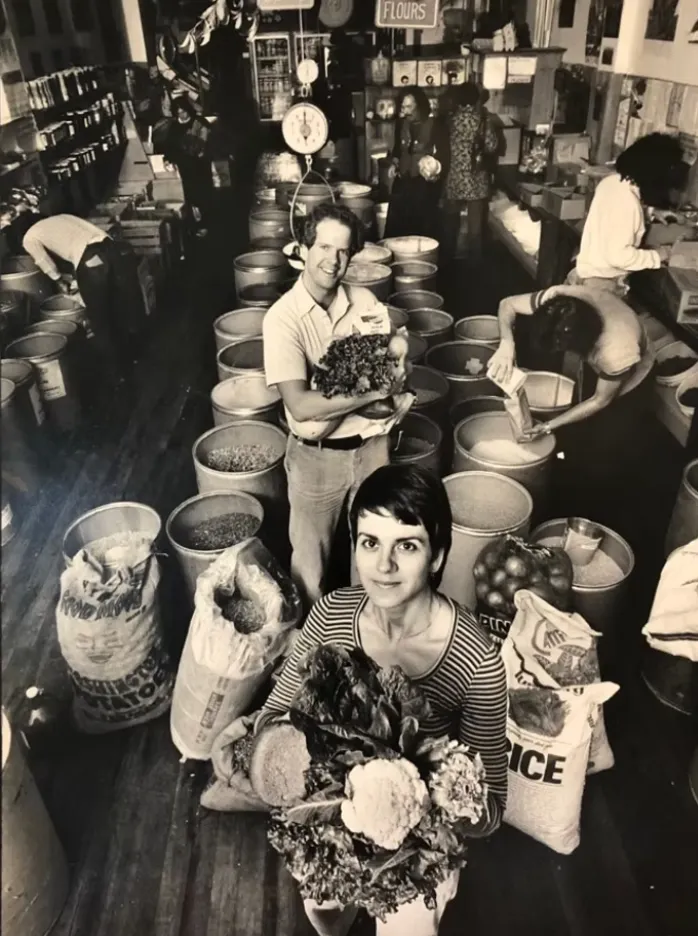
Lappé and Joseph "Joe" Collins in a San Francisco Food Co-op 1978. Image Credit: Diet for a Small Planet.org.
Lappé believed that if she could understand hunger, she could begin to understand the economic and political systems surrounding it.
Her research led her to a conclusion that would become central to her work: hunger is not the result of too little food. Instead, she argued that people can go hungry even amid abundance when they lack access to food, land, resources, or the power to shape the systems governing their lives.
For Lappé, food became a lens through which to examine much larger systems. She began looking at who had access to resources, who participated in decisions, and how agricultural and economic systems shaped what was grown, how it was produced, and who ultimately had access to it.
Those ideas became the foundation for the book that would make her one of the most influential voices in the modern food movement.
Diet for a Small Planet challenged the idea that scarcity was inevitable
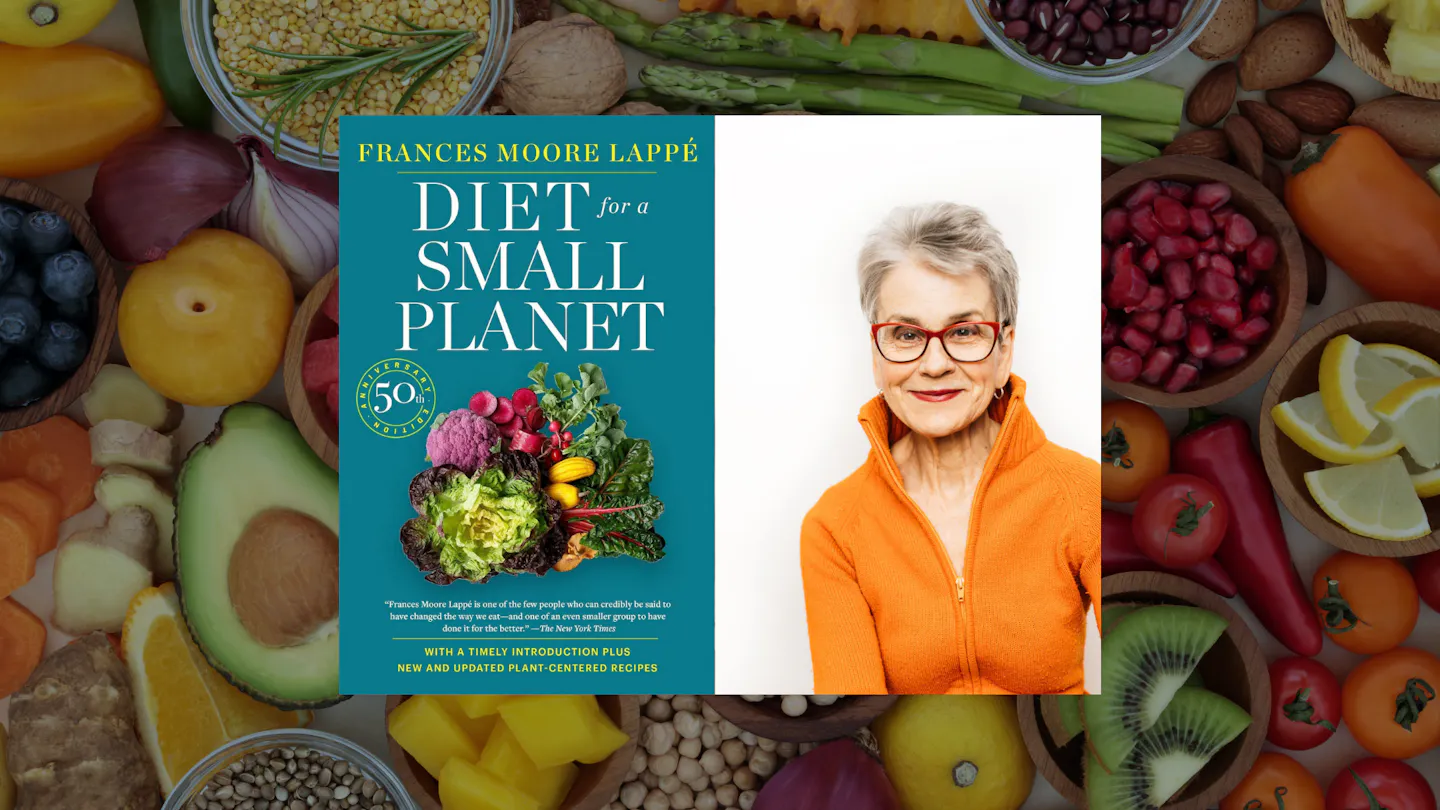
Published in 1971, Diet for a Small Planet began as a DIY pamphlet and grew into a bestselling book read by millions of people.
At a time when discussions of hunger often centered on producing more food, Lappé focused instead on how existing resources were being used. The book examined the environmental costs of meat production, the relationship between agriculture and global food scarcity, and the possibility of eating well with a diet centered more heavily on plant foods.
Recipes made those ideas tangible. Readers could encounter an argument about the global food system and then walk into their kitchens and make a meal.
But Diet for a Small Planet was never simply a cookbook. It asked readers to see everyday choices about food as connected to land, resources, economics, and the health of the planet
Lappé also revised some of her early nutritional advice over time. In the original edition, she emphasized carefully combining different Meat-free Proteins to ensure people received enough protein. In later editions, she clarified that a varied plant-based diet generally provides the protein and amino acids the body needs.
The larger message, however, remained the same: food systems can nourish people while also protecting the planet.
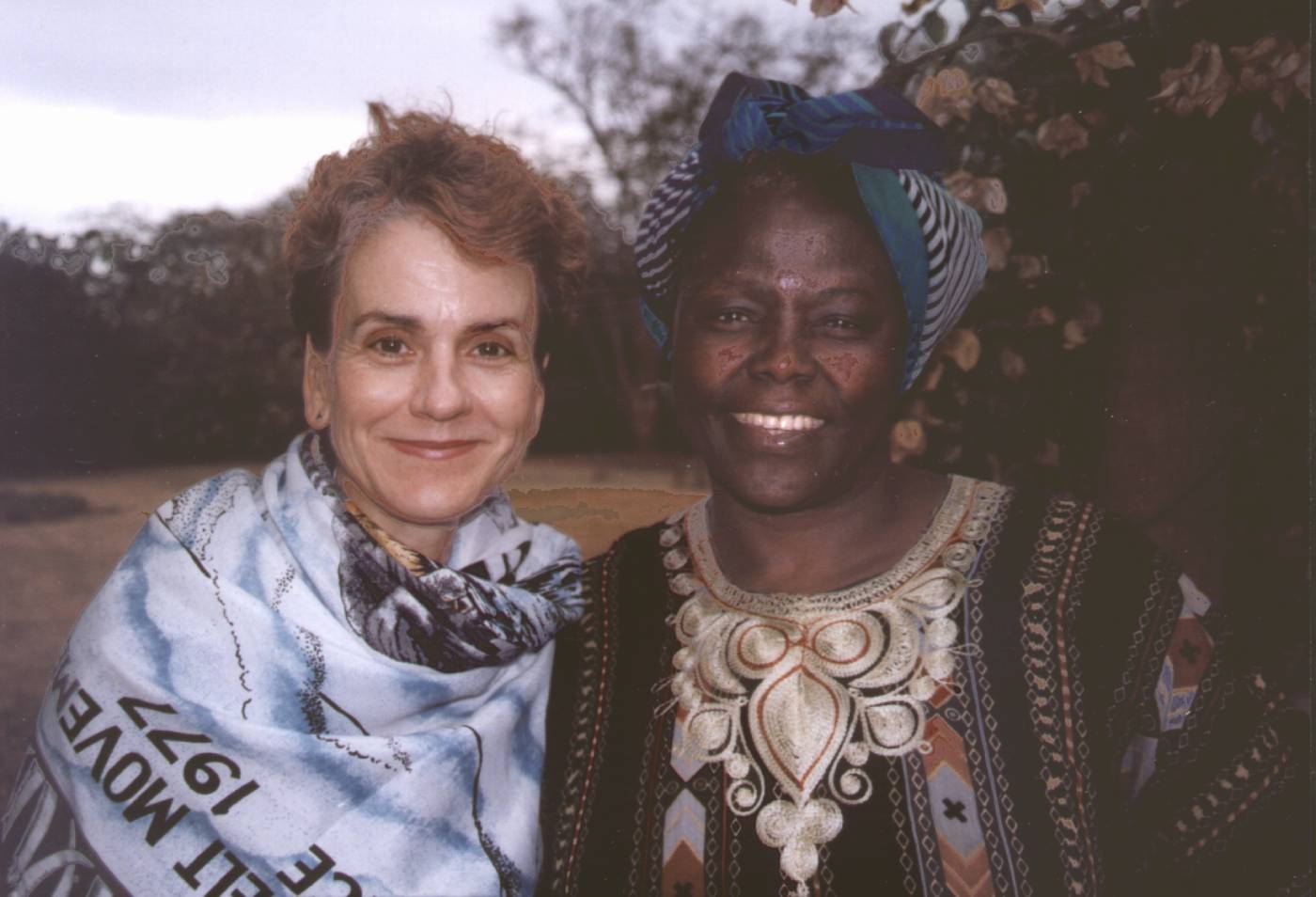
Lappé in 2000 with the person she calls her “lodestar of courage” and personal hero, Wangari Maathai, 2004 Nobel Peace Prize Winner, taken in Kenya during Frankie’s book research tour for Hope’s Edge: The Next Diet for a Small Planet, with Anna Lappé.
Food became a way to understand democracy
As Lappé continued studying hunger, her work increasingly focused on democracy.
She came to describe what she calls “living democracy,” an idea that goes beyond government institutions or what happens at the ballot box. In her work, living democracy means dispersing power widely, creating transparency in public life, and building a culture of mutual accountability. She argues that these conditions allow people to experience agency, connection, and meaning in their communities.
From this perspective, hunger is connected not only to agriculture but also to whether people have meaningful power over the systems that determine access to food and other basic needs.
Lappé has long argued that access to healthy food should be treated as a human right and that lasting solutions to hunger depend on giving people the ability to participate in the decisions affecting their lives.
Her work therefore moved far beyond questions about what should be on a dinner plate. It became an exploration of how societies distribute resources, how communities solve problems, and how people can participate in shaping the systems around them.
She built organizations to turn her ideas into action
In 1975, Lappé co-founded the Institute for Food and Development Policy, better known as Food First, with Joseph Collins. The organization was created to educate people about the underlying causes of world hunger.
She later co-founded the Center for Living Democracy, an initiative focused on spreading democratic innovations and highlighting examples of ordinary people participating directly in solving community problems.
In 2002, Lappé and her daughter, Anna Lappé, established the Cambridge-based Small Planet Institute, bringing together research and public education around food, democracy, and social change. The two also traveled together while researching Hope’s Edge: The Next Diet for a Small Planet and helped create the Small Planet Fund to support democratic social movements around the world.
Lappé later became a founding councilor of the World Future Council and has served on the National Advisory Board of the Union of Concerned Scientists.
A legacy that reaches far beyond the dinner table
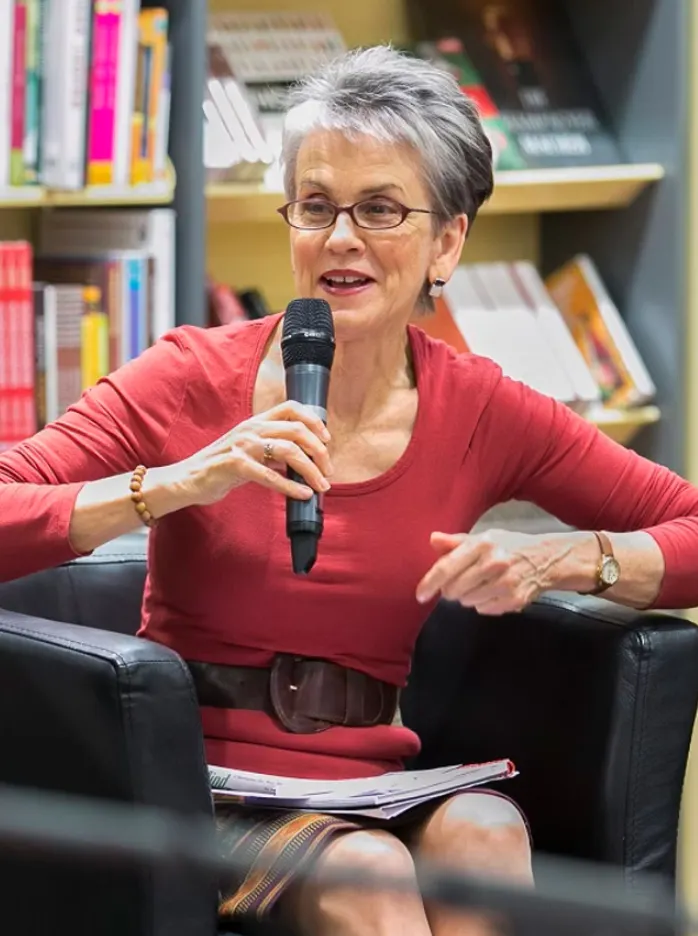
Lappé speaking at Projects of Hope in Bregenz, Austria 2013. Image Credit: Diet for a Small Planet.org.
Lappé has written or co-written more than 20 books exploring food, hunger, democracy, social change, and the environment. Her work has been translated into numerous languages and has taken her from universities and classrooms to communities around the world.
She has also received 20 honorary doctorates. In 1987, Lappé received the Right Livelihood Award for her work examining the political and economic roots of hunger, and in 2008, the James Beard Foundation named her Humanitarian of the Year.
The Smithsonian’s National Museum of American History has described Diet for a Small Planet as “one of the most influential political tracts of the times,” while the Women’s National Book Association selected it as one of 75 books by women whose words have changed the world.
Long before conversations about sustainable diets became common, Lappé was asking people to consider how food production affects land, resources, and the environment. More than 50 years later, those ideas remain relevant as communities look for ways to grow food more sustainably, regenerate agricultural landscapes, and support both human and planetary health.
Today, Lappé’s work continues to make the case that food systems can nourish people, strengthen communities, and protect the planet.
Explore similar content

Subscribe to receive monthly updates on climate solutions, environmental heroes, and the profound beauty and wonder of our shared planet Earth.